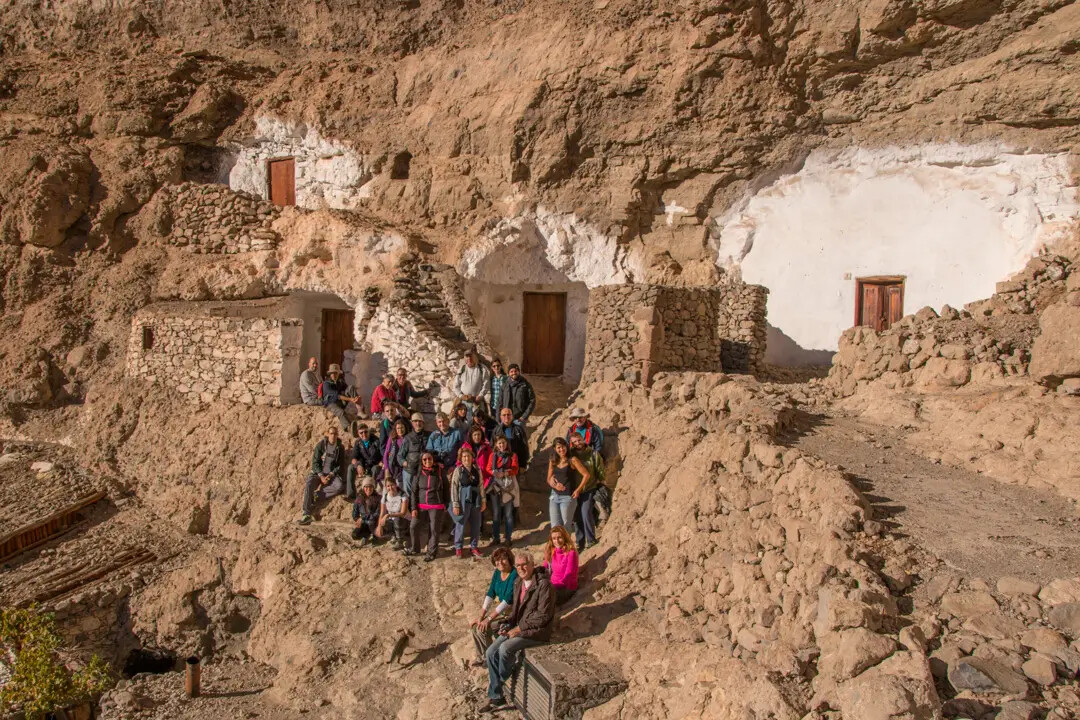
Acusa Seca is one of the most striking troglodyte settlements in Gran Canaria. Set into the cliffs of the Mesa de Acusa in Artenara, it preserves a landscape where ancient cave dwellings, granaries, archaeological remains and later rural homes sit side by side.
Official tourism information from Artenara describes Acusa as one of the municipality's most important archaeological areas and notes that cave habitation here continued across centuries, with older indigenous spaces reused and adapted after the Castilian conquest.
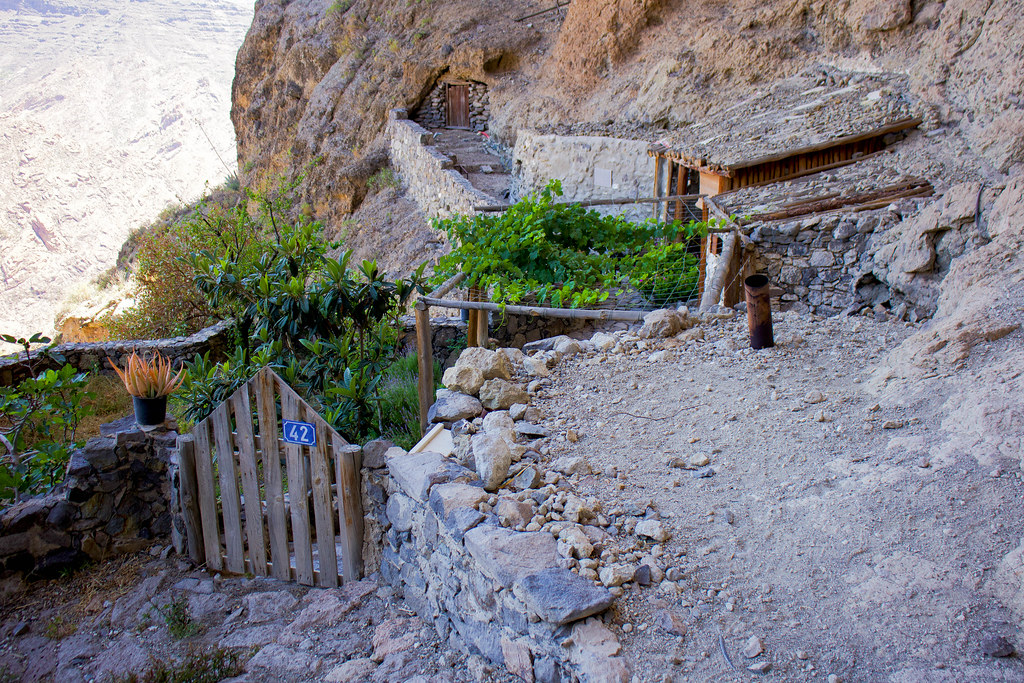
A village carved into the rock
Living with the cliff, not against it
The steep terrain around Acusa encouraged generations of inhabitants to make use of natural cavities and excavated spaces in the volcanic rock. Over time these became homes, storage spaces and working areas adapted to everyday rural life.
Artenara's tourism office highlights Acusa Seca, Acusa Verde and Candelaria as part of a broader group of historic settlements around the Mesa de Acusa. The area is one of the clearest places on the island to understand how cave living became a practical and enduring way of life.
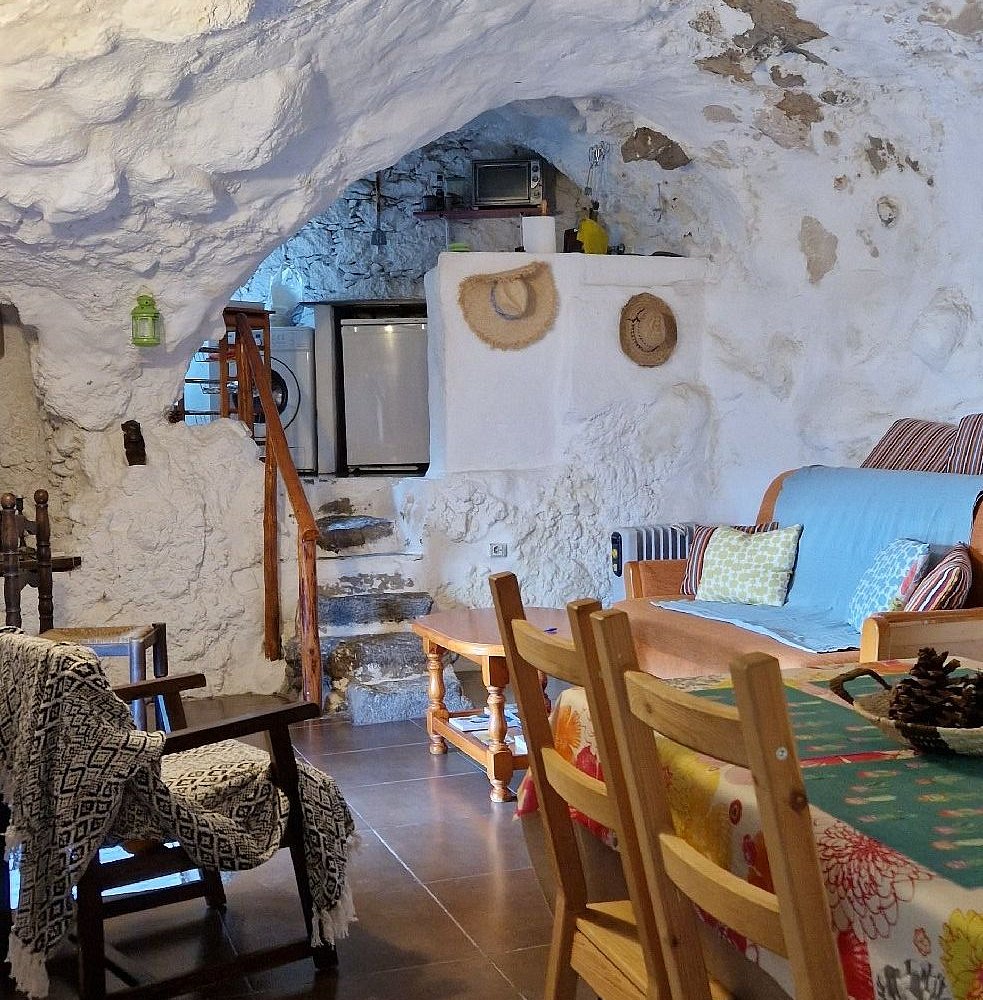
Inside a cave home
Troglodyte living is not only history
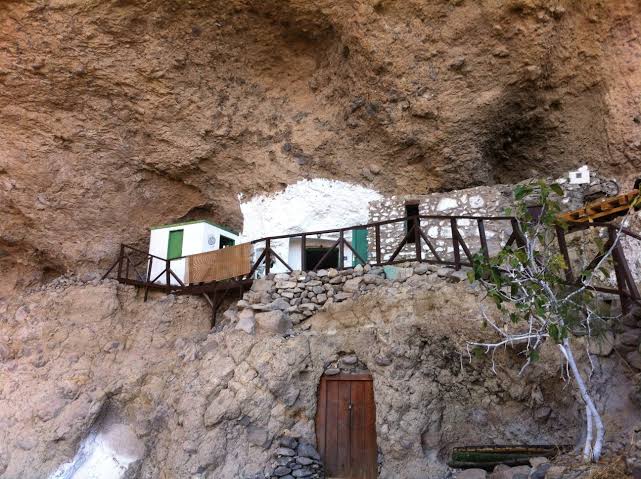
One of the most interesting things about Acusa is that cave architecture did not disappear with the indigenous period. Over generations, people adapted excavated spaces into practical homes with kitchens, living rooms, storage areas and terraces.
This continuity helps explain why Artenara is so closely associated with cave living: the landscape itself became part of the architecture, providing naturally sheltered spaces that could be expanded and adapted over time.
Why Acusa Seca is archaeologically important
The archaeological area includes cave dwellings, granary caves, burial spaces and other sites linked to the indigenous population of Gran Canaria. Artenara's official archaeology information also describes painted caves and a landscape in which domestic, agricultural and funerary uses were concentrated around the plateau.
From indigenous settlement to rural village
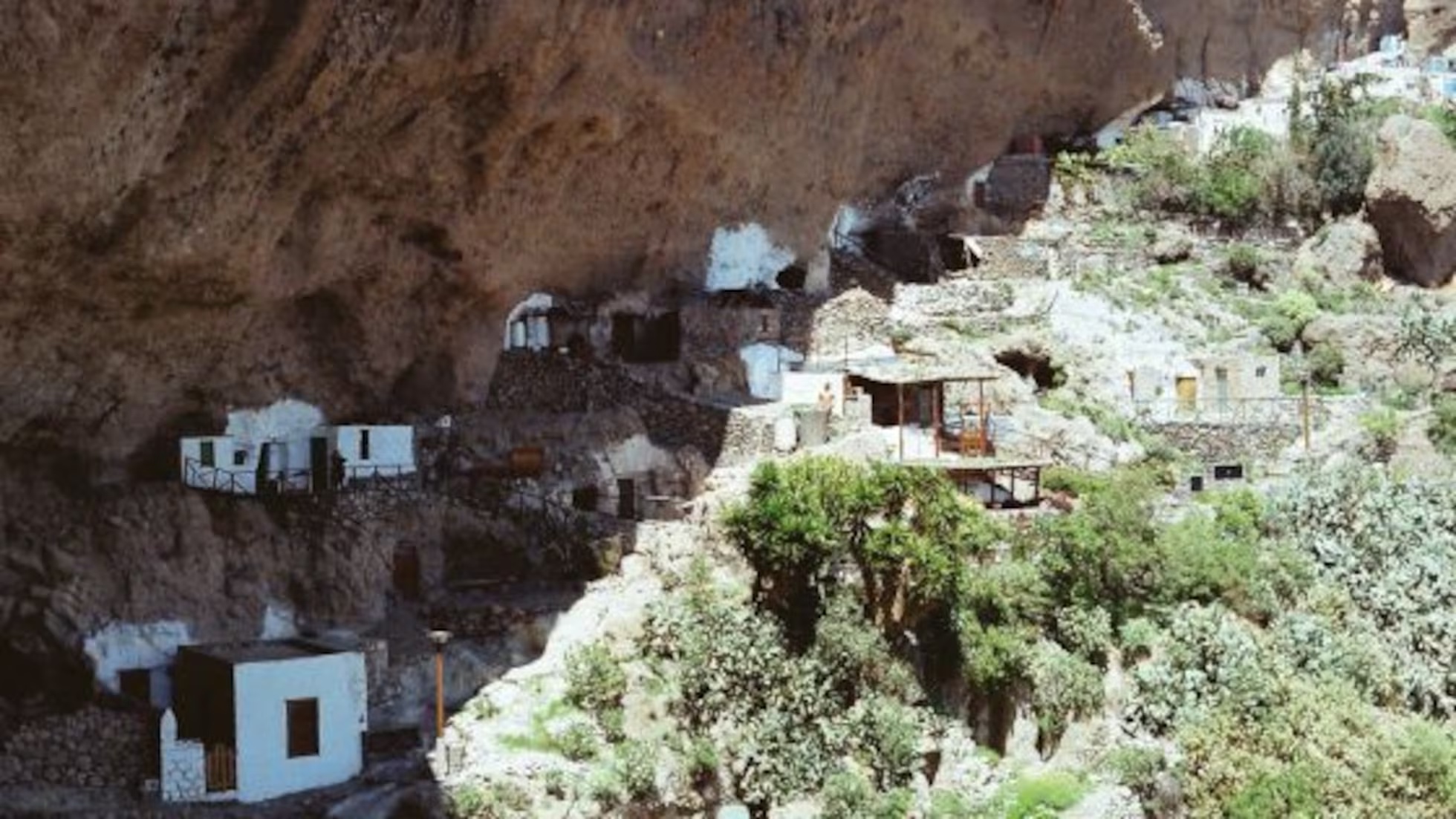
Centuries of continuity
Acusa was once one of the most important population centres in Artenara. According to the municipality's tourism information, its agricultural and livestock resources supported a large community and Acusa remained the municipality's largest population nucleus until around 1920.
The same sources note that the first chapel in the area was established in a cave at Acusa Seca, known as the Cueva de San Juan — another example of how cave spaces continued to be adapted long after the pre-Hispanic period.
What you will see today
Acusa Seca is best appreciated slowly. The appeal is not one single monument, but the relationship between cliff, caves, stonework, vegetation and the vast landscape of the Caldera de Tejeda.
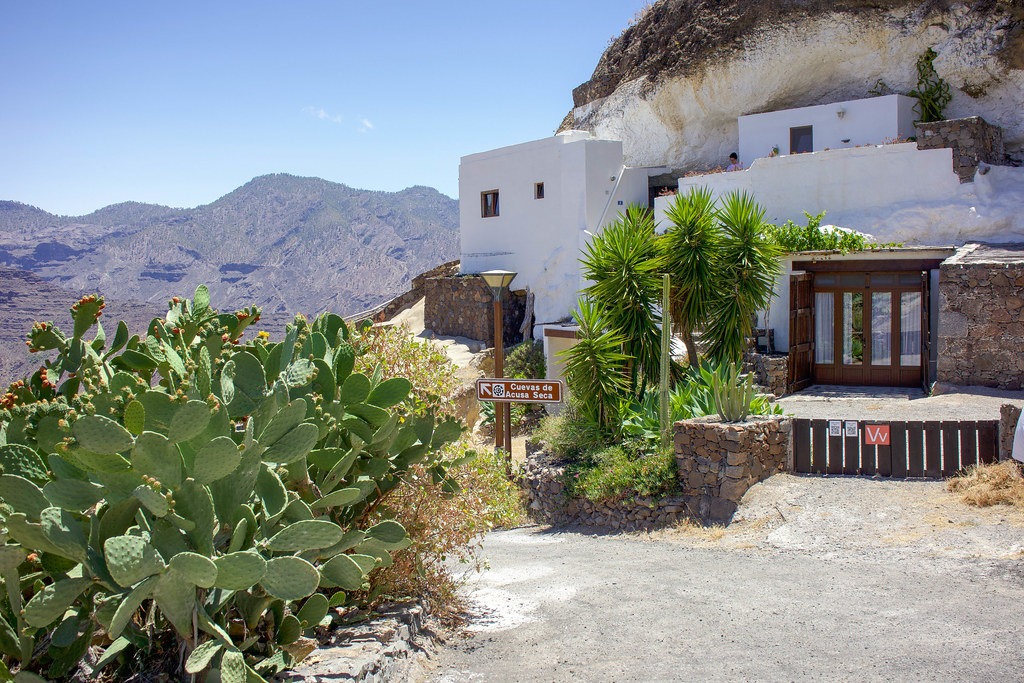
How to get to Acusa Seca
Acusa lies west of Artenara, on the Mesa de Acusa. Follow the signed local roads from Artenara toward Acusa and continue carefully through the mountain landscape. Roads in this part of Gran Canaria are narrow and winding, so allow more time than the distance suggests.
If you prefer to walk, the Artenara Tourism Office publishes a hiking route from the Plaza de San Matías in Artenara to Acusa Seca, passing the cemetery and a series of rural waypoints before reaching the settlement.
Before you visit
- Wear suitable shoes: paths and surfaces can be uneven and steep.
- Respect private homes: Acusa Seca is a real settlement, not only an archaeological attraction.
- Do not enter restricted caves: archaeological resources in the municipality are managed by the Cabildo de Gran Canaria.
- Check current access: mountain roads, trails and archaeological areas can have temporary restrictions.
- Combine it with Artenara: the village centre, cave-house museum and viewpoints make a natural companion visit.
Is Acusa Seca worth visiting?
Yes, especially if you want to understand a side of Gran Canaria that most beach visitors never see. Acusa Seca combines archaeology, vernacular architecture and dramatic inland scenery in a place that still feels deeply connected to the island's rural past.
Information checked against official sources: Artenara Tourism — Archaeological Site of Acusa Seca, Artenara Tourism — Mesa de Acusa, and Artenara Tourism — Route to Acusa Seca.